
Latest News
-
[ April 20, 2013]
Prof. Zigang Ge interviewed by journal Biomedical Materials
-
Recently, an article on cartilage regeneration from Professor Zigang Ge’s Lab at Department of Biomedical Engineering, College of Engineering, Peking University in the prestigious journal Biomedical Materials was chosen by the editors as ‘Editors’ Pick’. The article entitled “Poly (l-lactide-co-caprolactone) scaffolds enhanced with poly β-hydroxybutyrate-co-β-hydroxyvalerate) microspheres for cartilage regeneration” appeared in the February 2013 issue of the journal.As “the Editors-in-Chief feel the article will be of particularly high interest to our readers”, the journal published online an interview with Prof. Ge, in which Ge introduced his research team, their latest research progress and future plans. Details of the interview text is as below.
Biomedical Materials' Interview with Zigang Ge
Who are you?
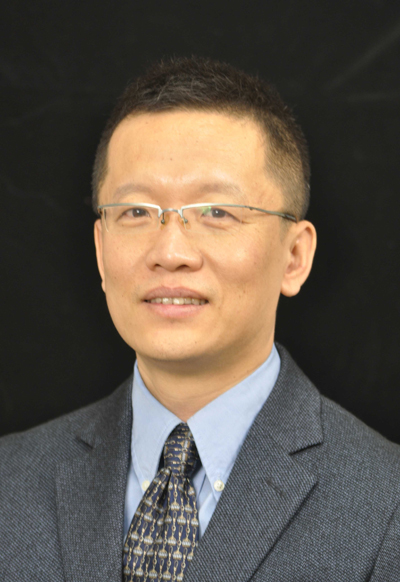
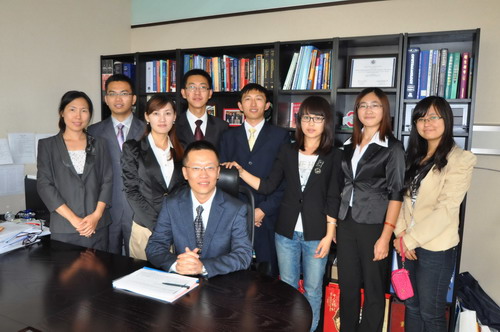
Picture. Prof. Zigang Ge and his research team.
Dr Zigang Ge is a Professor in the Department of Biomedical Engineering at Peking University. Mr Chao Li, a PhD candidate under the guidance of Dr Ge, is the first author of this article and has been exploring functional biomaterials for cartilage regeneration. Ms Jingjing Zhang, a PhD candidate under the guidance of Dr Ge, has been exploring the relationships between cell phenotypes and the internal structures of biomaterials. Mr Yijiang Li is also a PhD candidate in the Ge Lab completing research on the maturation of regenerated cartilage. Mr Shamus Moran is an exchange student from the Wallace H Coulter Department of Biomedical Engineering at Georgia Institute of Technology. Dr Gilson Khang is a Collaborative Professor in the Department of Polymer Nano Science and Technology at Chonbuk National University, Korea.
What prompted you to pursue this field of research?
There are few functional biomaterials specifically designed for cartilage regeneration using scaffolding biomaterials, though many biomaterials have been designed and fabricated with an aim to regenerate cartilage. Mechanical compatibility is critical for both neo-cartilage and the biomaterials. Our initial attempt was to fabricate bi-phasic viscoelastic porous scaffolds with an aim to develop scaffolds with mechanical properties similar to native cartilage by simulating the natural components of cartilage, collagen, aggrecan, as well as their interactions. Elastic poly(L-lactide-co-ε-caprolactone) (PLCL) was used to fabricate scaffolding materials, while hydrophilic chitosan, a substitute of glycosaminoglycan, was crosslinked to PLCL to provide bi-phasic structures. Though viscoelastic properties of the scaffolds were similar to native cartilage, the compressive Young's modulus was one magnitude less than native cartilage. Several strategies could have been adopted to enhance Young's modulus, such as using stiffer materials as scaffolding materials, making denser structures, crosslinking materials, as well as integrating stiffer materials into current structures. We chose to integrate stiffer materials into current scaffolds over other options, with an aim to maintain the viscoelastic properties of the biomaterials.
What is this latest paper all about?
Porous PLCL scaffolds have previously been fabricated for cartilage tissue engineering; however, the low compressive Young's modulus of these scaffolds hindered their utility. In this study, poly(β-hydroxybutyrate-co-β-hydroxyvalerate) (PHBV) microspheres were integrated into the PLCL scaffolds with an aim to improve the Young's modulus and increase surface topography for the attachment of chondrocytes. The composite scaffolds were fabricated with a combination of porogen-leaching and lyophilization methods. Current PHBV microsphere/PLCL composite scaffolds have a relatively higher compressive strength than traditional PLCL scaffolds. Results from both in vitro and in vivo studies demonstrated that the systems were biocompatible and could serve as scaffolding structures for cartilaginous tissues formation.
What do you plan to do next?
An unexpected finding that the PHBV microspheres integrated into scaffolds could condense the cells within the biomaterials has guided us to explore novel strategies to intentionally condense the cells with biomaterials, which not only could enhance efficiency of regeneration, but also could serve as a research model for cell condensation and aggregation.