-
[ June 27, 2013]
LTCS organizes the Fifth International Symposium on Physics of Fluids
-
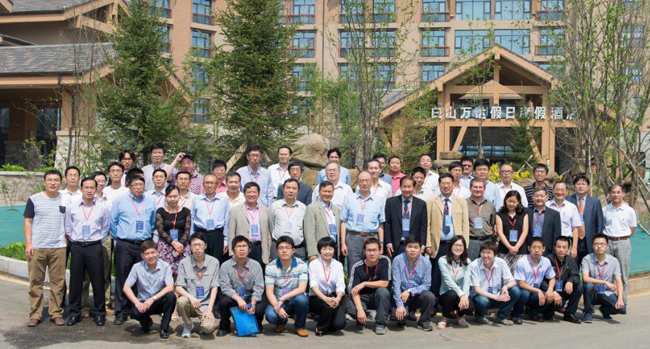
 Organized by the State Key Laboratory for Turbulence and Complex Systems (LTCS), College of Engineering, the Fifth International Symposium on Physics of Fluids (ISPF5) was held during June 9-13, 2013, in Changbaishan, Jilin Province, China.
Prof. Cunbiao Lee from LTCS served as the chair of the conference. Prof. Chang Shu from National University of Singapore (NUS) and Prof. Ning Zhao from Nanjing University of Aeronautics and Astronautics, China served as the co-chairs.
More than sixty experts and researchers from home and abroad came to the conference, including researchers from Singapore, Australia, America, England and Japan.
From its origins as a tool primarily for use in aerospace engineering, mechanical engineering, civil engineering and chemical engineering, the application of fluid mechanics and thermodynamics has spread to a wide range of containing other fields, such as micro-electromechanical systems (MEMS), bio-engineering, nano-technology, and so on.
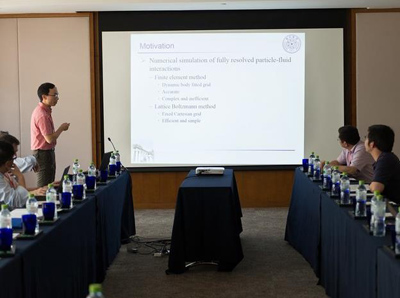
 Many advances have been made in the computational and experimental fluid dynamics such as on the turbulence modeling, flow stability, flow visualization and measurement, development of efficient numerical methods for CFD, micro- and nano-flow study, bio-fluidics, moving boundary flow problem, unsteady flow study, lattice Boltzmann method and its application, meshless method, solution-adaptive approach, immersed boundary method, fluid-structure interaction and energy conversion system.
First held in 2005, ISPF has been providing a regular platform for leading researchers in the field of Fluid Physics for communication and exchange over the past ten years.
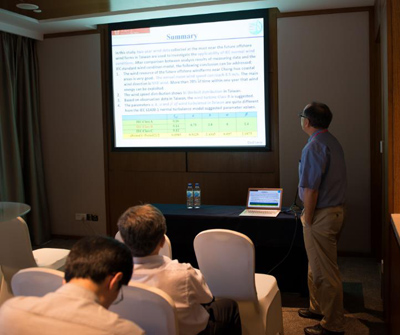
Through technical presentations and roundtable discussions, this year’s conference, sponsored by LTCS and NUS, highlighted the current advances and future research and development in physics of fluids with primary focus on the connection between fundamental research and engineering applications.
“We aim is to assess the current status and to identify the future priority and directions in research and applications of fluid physics field,” said Prof. Lee.