
-
[ February 20, 2016]
The 3rd Sino-U.S. Workshop on Sustainability Issues at the Nexus of Energy, Water, Climate and Air Pollution held at Peking University
-
On January 21-22, sponsored by National Natural Science Foundation of China, US National Science Foundation, and the Beijing High-tech Innovation Center, the 3rd Sino-U.S. Workshop on Sustainability Issues at the Nexus of Energy, Water, Climate and Air Pollution (NEWCAP?was held at Zhongguanyuan Global Village of Peking University. Professor Dongxiao Zhang, dean of the College of Engineering, and Professor Tong Zhu, dean of the College of Environmental Science and Engineering served as the China Co-Chairs.
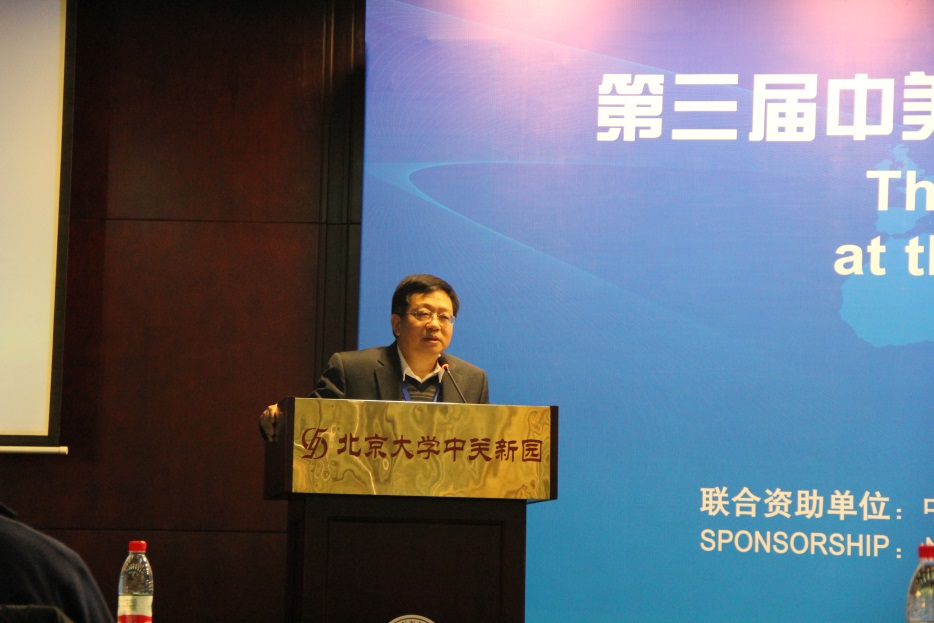
Prof. Dongxiao Zhang gave a welcome speech as the China Co-Chair
Energy, water resources, climate, and air pollution have become closely related over time through the technological evolutions, atmospheric and geochemical reactions of natural or anthropogenic pollution sources. The 3rd NEWCAP workshop is an outgrowth of previous 2014 and 2013 NEWCAP workshops to review and further explore the establishment of several Sino-U.S. collaborative research teams to identify priorities for major projects in NEWCAP areas.
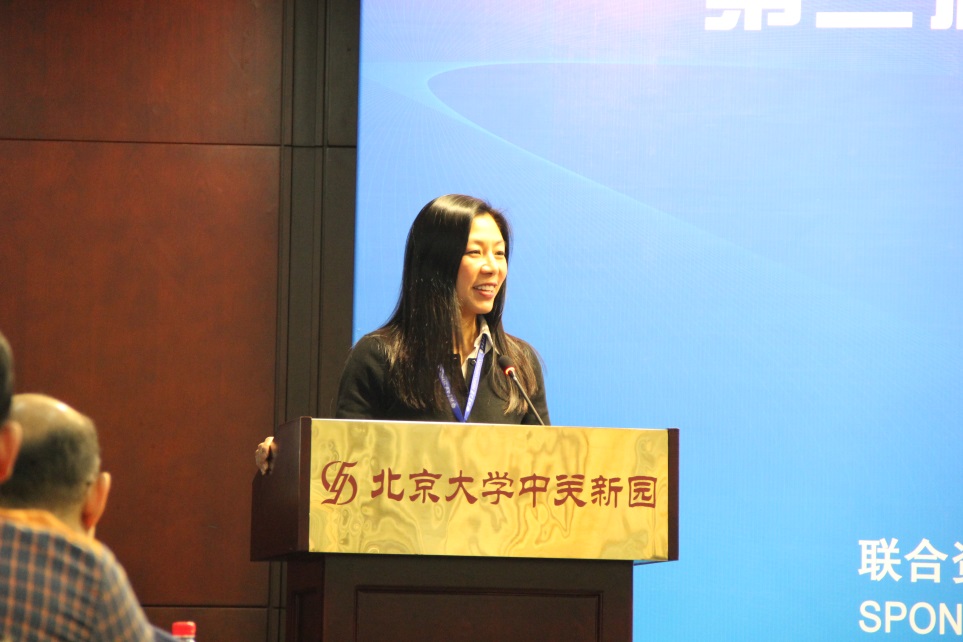
Prof. Sunny Jiang, University of California, Irvine gave a speech as the US Co-Chair
The workshop lasted two days and set up four sessions, namely, 1) The Urbanization and Its Challenges on Energy, Climate, Water and Air, 2) The Impacts of Oil and Natural Gas Development on Water and Air Resources, 3) The Impacts of Combustion to Air Quality and Climate Change, 4) The Sustainable Water-Resource Development and Management.
31 experts from over a dozen of China and US universities and research institutes introduced their research progress, and gave solution suggestions on the grand challenges and key problems we currently face in the fields of environment and energy.
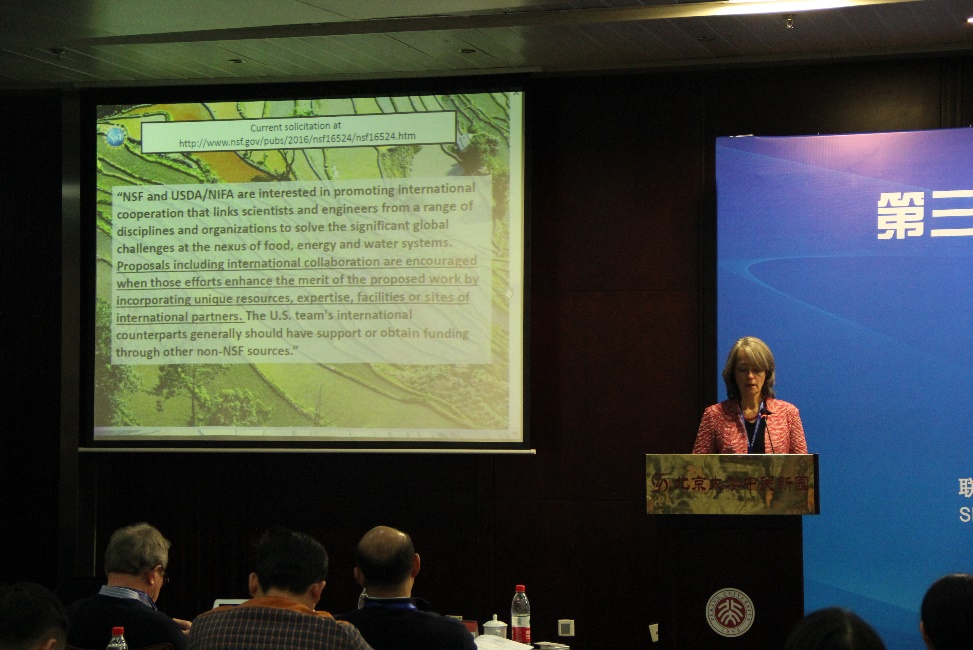
Dr. Nancy Sung, China Office at US NSF gave an invited speech
In addition, in the panel discussion session, the participants agreed that China and US should increase collaborative projects in the future, that they should start from basic research to fill in gaps in the knowledge system, and then move from small system to large ecology and solve real problems. They also agreed that besides collaboration in funding, an ecology system of cooperation should be established, which should cover bilateral student exchange, communications between the research teams, and deep collaborations based on interests and research areas.
Over a hundred scholars, experts, and practitioners from the academic and industry participated in the workshop, which was believed to have helped them develop concepts for energy production in harmony with socio-economic development and adaptive resource management and achieve minimization of environmental pollution and climate change.
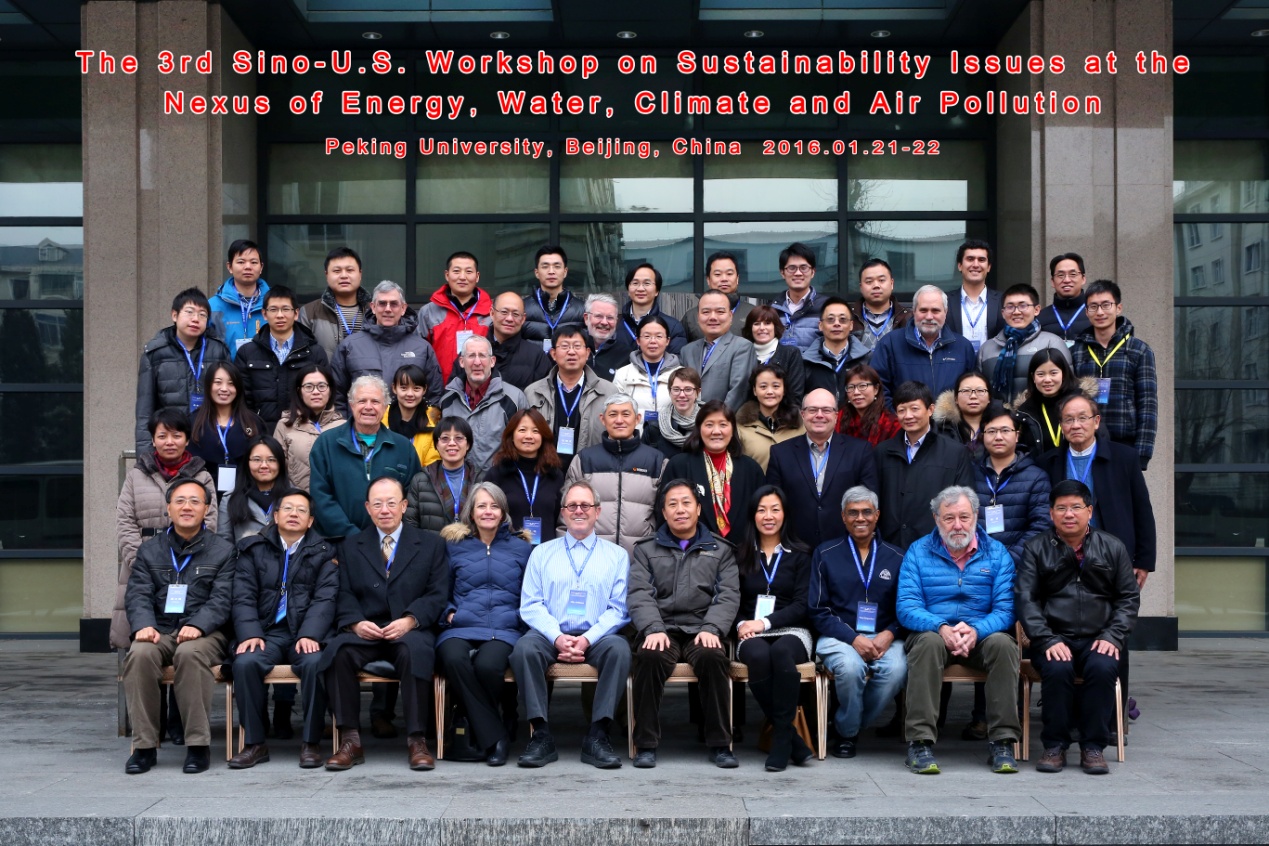
Group photo