
-
[ March 01, 2016]
An English book “Recent Advances in Microalgal Biotechnology” edited by Dr. Jin Liu and others is published
-
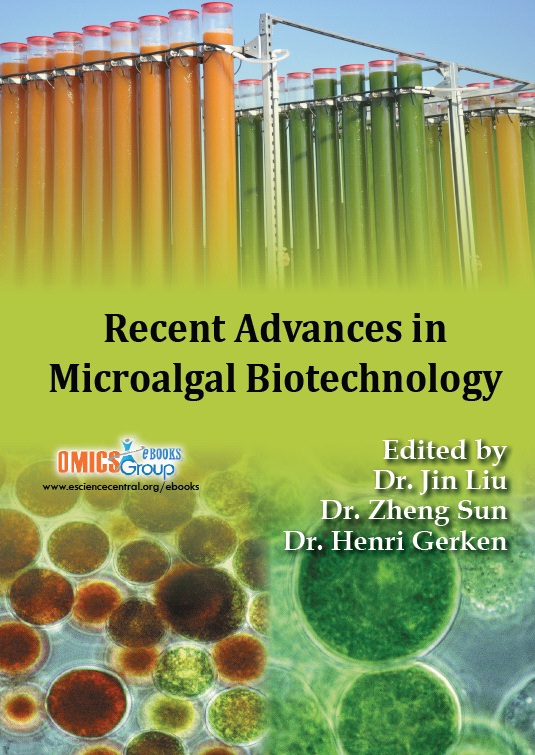
 An English book “Recent Advances in Microalgal Biotechnology” edited by Dr. Jin Liu, assistant professor in the Department of Energy and Resources Engineering, College of Engineering, Peking University and others was published by OMICS Group eBooks recently (ISBN:978-1-63278-066-9). The other two editors are Dr. Zheng Sun of Shanghai Ocean University, China and Dr. Henri Gerken of Arizona State University, USA.
The book includes four parts-Microalgae and Environment, Microalgal Food, Microalgal biofuels and Microalgae engineering, in altogether 16 chapters. Based on his research experience of many years, Dr. Jin Liu aggregated the latest advances and development prospects from many professionals and experts in the field of microalgae biotechnology. Microalgae are known as green photosynthetic single-cell factories. They are widely distributed, fast growing, highly efficient in photosynthesis and carbon dioxide fixation. Nearly 50% of global carbon dioxide is absorbed and fixed by algae.
Secondly, they have extensive uses, with the potential to produce a series of high-value products. Protein-rich, microalgae was used in commercial production of food early in the 1960s and now on a considerable scale in the United States, Japan, China and other places. Microalgae can also be used to produce carotenoids (such as astaxanthin, β- carotene, fucoxanthin, lutein, etc.), polyunsaturated fatty acids (such as EPA, DHA, ARA, etc.) and other high-value active substance.
 In addition, microalgae are also rich in oil, and considered the most promising alternative to existing vegetable oils used for biodiesel production, attracting a growing number of researchers and the public interest in recent years.
In the end of 2015, the United Nations Climate Change Conference approved the "Paris agreement", and strived to achieve peak greenhouse gas emissions as soon as possible, which means controlling the global average temperature increase within 2? from pre-industrial levels. China strives to achieve carbon dioxide emissions to peak in 2030, which is a great challenge. The nation’s "Thirteen Five-Year Plan" put forward that the country should adhere to green development, make efforts to improve the ecological environment, adjust agricultural development, ecological security and energy structure and actively promote the development of low-carbon cycle. Microalgae bioenergy will play an important role in low-carbon sustainable development.
Link to the book:
http://www.esciencecentral.org/ebooks/recent-advances-in-microalgal-biotechnology/