-
[ April 30, 2014]
2014 Asian Engineering Deans Summit (AEDS) successfully held at Peking University
-
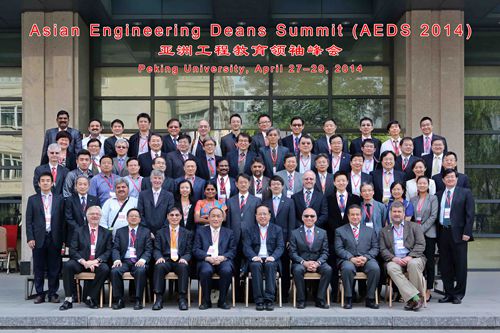
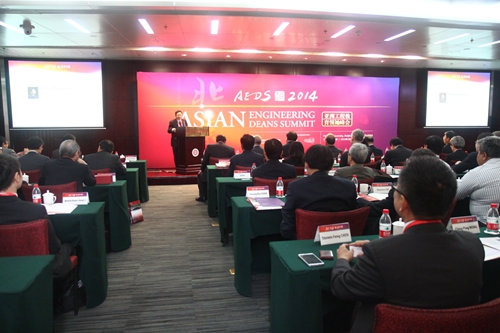 Organized by the College of Engineering, Peking University, the 2014 Asian Engineering Deans Summit (AEDS) was grandly held at Zhongguanyuan Global Village of Peking University on April 28-29. The mission of the conference is to serve as a network for engineering deans to leverage their collective strengths for the advancement of engineering education, research and service to the Asian community. The theme of the two-day conference is New Challenges and Opportunities for Asian Engineering Education and Research. Over 60 engineering deans and university presidents from Asian countries including Singapore, Japan, Korea, India, China, as well as from other regions including Australia, U.S., and France attended the summit. Schneider Electrics, Tri-Star, MathWorks, Tobefar, and Lenovo sponsored the event.
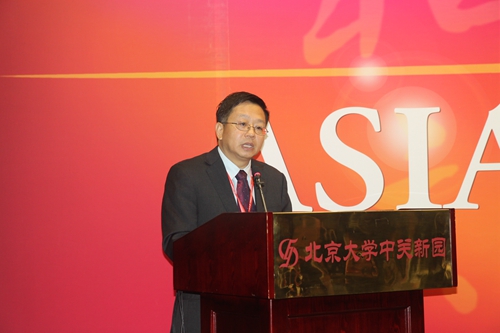 At the opening ceremony, Professor Dongxiao Zhang, general chair of the conference and dean of the College of Engineering, extended his sincere welcome to all the AEDS attendees. Engineering is a discipline that is highly related to application. In terms of engineering education, it has always been a challenge how to balance the pursuit of theoretical depth and application values, and how to make the two sides promote each other. Three years ago, the Global Engineering Deans Council conference took place at Peking University (PKU), at which Professor Shiyi Chen, then dean of the College of Engineering and Professor Dongxiao Zhang, then the executive vice dean, shared the view with many Asian engineering deans that a conference in the Asian scope is needed to further the discussion about Asian engineering education and research.
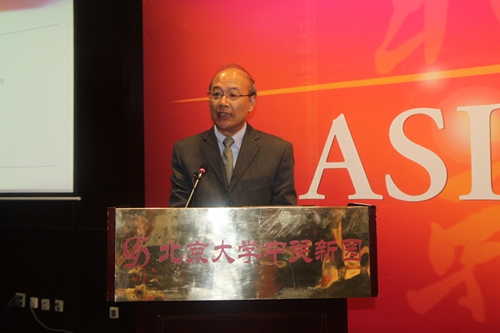 The opening speech was made by Professor Enge Wang, President of PKU. Wang introduced the history and recent development of the university and the College of Engineering. In recent years, PKU has cultivated and brought in a great number of high-caliber faculty and researchers, established many first-class research laboratories, made use of its advantages in basic disciplines, and strived to become a world-class university that is research-oriented. In particular, the College of Engineering, re-established in 2005, has since then focused on the development of cutting-edge technologies, future directions of engineering science and tried to meet the most urgent demand of economic development of the nation. Wang said, “all the attendees are elites in engineering education from all over the world. Your ideas, actions and efforts will definitely change the world of future engineering students. I sincerely hope that you can make full use of this opportunity, to generate wisdom and inspiration, and draw a better picture for tomorrow.”
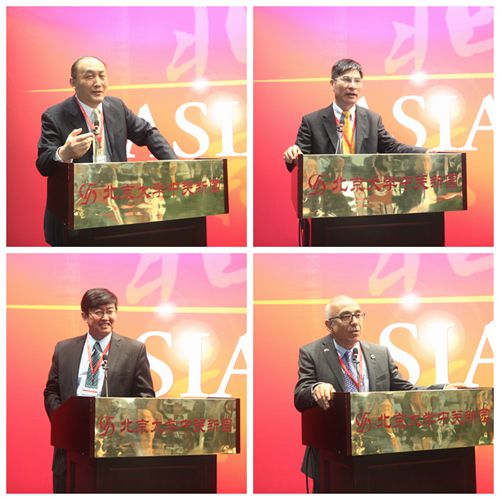 Subsequently, keynote speaker Professor Wei Yang, President of National Natural Science Foundation of China, talked about the Characteristic Development for Engineering Schools/Clusters in China. Professor Liang-Gee Chen, Vice President of National Taiwan University, gave a speech entitled “Transforming Innovation into Impact”. Mr. Wei Cai, Founder and CTO of Jing-Jin Electric, delivered a talk on “GLobal Opportunities and Challenges of Vehicle Electrification”. Professor Feigin Paul David, Vice President of Technion-Israel Institute of Technology talked on the “Globalization and Diversification with GEDC and with Focused Partnerships”.
During the two days, the attendees discussed common problems that challenge Asian engineering education and research in three sessions: Engineering Education – Globalization and Diversification, Engineering Research and Innovation in a Globalized World, and Entrepreneurship and Technology Transfer in Asia and Beyond. At least fifteen college deans shared their individual educational, research and technology transfer experiences in their universities and countries, including student exchange programs, higher education system, research initiatives, and cultural communication. The attendees participated actively in the discussion. They expressed that in the increasingly globalized world, understanding and communications between different universities and different countries are very important, and they found the conference refreshing and informative.