
-
[ February 15, 2012]
A Sr-based bulk metallic glass may become good candidate for biodegradable implant material
-
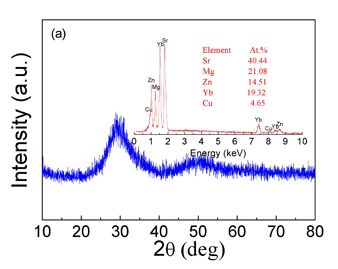
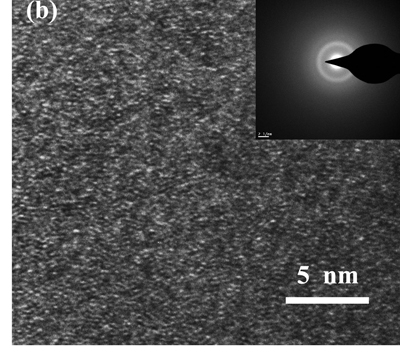 Professor Yufeng Zheng from the Department of Materials Science and Engineering and his research team have fabricated a novel Sr-based bulk metallic glass (BMG) to test its suitability for biodegradable implant materials. Investigations on its mechanical properties, corrosion behavior and cellular compatibility revealed that this BMG, with nominal composition of Sr40Mg20Zn15Yb20Cu5, would become a good candidate. They published their findings in the February issue of Journal of Biomedical Materials Research B: Applied Biomaterials.
For people who have undergone orthopedic surgeries, the properties of implant materials will greatly affect the healing process. Compared with ceramics and polymeric materials, metallic materials are known to be more suitable to support the repair or replacement of bone tissues. Currently used metals include stainless steels, titanium and cobalt-chromium-based alloys.
Nevertheless, permanent metallic implants have many drawbacks. First, the discrepancy in elastic moduli between metallic biomaterials and natural bone tissue might result in reduced stimulation of new bone growth. Second, possible release of toxic metallic ions through corrosion processes might lead to inflammation of tissues. Third, permanent fixtures to secure serious fractures will have to be removed through second surgery after the tissue has fully healed, which would bring further morbidity to the patient.
These limitations of currently used bioinert metallic biomaterials lead to the search for biodegradable implant materials in recent years, as the latter can be gradually dissolved, absorbed, consumed or excreted in the human body.
Among various biodegradable materials, Zheng’s team believed that Sr-based BMG has great potential to serve as biocompatible and degradable implants. BMG is a neoteric class of alloys with superior strength, high elastic strain limit and excellent wear resistance, while Sr (Strontium) was found to aid bone growth, increase bone density, and lessen vertebral, peripheral, and hip fractures.
“According to our previous research, a particular Sr-based BMG, Sr40Mg20Zn15Yb20Cu5, has the best corrosion resistance and relatively low degradation rate, so we decide to have a full evaluation of it,” said Huafang Li, a third-year graduate student in the Department of Materials Science and Engineering and co-first author of the paper.
The team prepared the Sr-based BMG with nominal compositions (at.%) of Sr40Mg20Zn15Yb20Cu5 using induction-melting and copper mould casting method. Then, they investigated its mechanical properties, corrosion behavior and cellular compatibility in vitro.
 The results show that the Sr-based BMG has higher compression strength and better corrosion resistance than that of Ca60Mg15Zn25 BMG and conventional crystalline pure Mg and Mg alloys. It also has similar Young's modulus to cortical bone. Furthermore, the indirect and direct cytotoxicity tests show that it indicates satisfactory cell viability. Moreover, MG63 cells are found to be well adhered on the surface of the Sr-based samples, indicting its good biocompatibility.
 The team concluded that the combination of increased mechanical strength, greater corrosion resistance, and excellent biocompatibility makes the Sr40Mg20Zn15Yb20Cu5 BMG very attractive material for biodegradable orthopedic implant applications.
“Due to various limitations we are not able to carry out the in-vivo study at present, but I would love to see further investigations of this material. It would be fantastic if BMG would go to the clinic one day and really benefit the patients,” said Li.
﹟﹟﹟Other authors who contributed to this work include K. Zhao and W.H. Wang from the Institute of Physics, Chinese Academy of Sciences and Y.B. Wang from Laboratory of Biomedical Materials and Devices, Peking University.
This work was financially supported by Research Fund for the Doctoral Program of Higher Education, National High Technology Research and Development Program of China (863 Program), National Basic Research Program of China (973 Program), National Natural Science Foundation of China, and Program for New Century Excellent Talents in University.
Paper cited:
Li HF, Zhao K, Wang YB, Zheng YF, Wang W.H. 2012. Study on bio-corrosion and cytotoxicity of a sr-based bulk metallic glass as potential biodegradable metal. J Biomed Mater Res Part B 2012:100B:368–377.