
-
[ October 24, 2014]
New research progresses on superhalogen
-
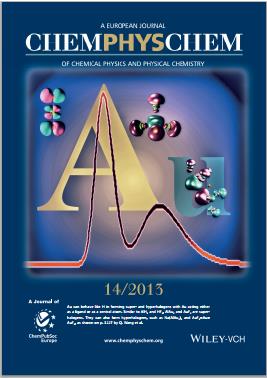
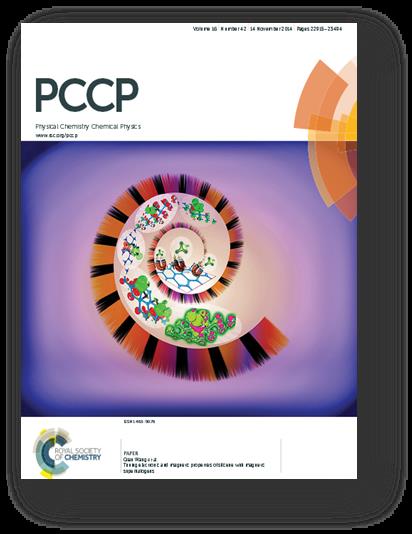
Recently, new progresses on superhalogen have been made by Prof. Qian Wang’s group at the Center for Applied Physics and Technology (CAPT) in Peking University and their collaborators. Two papers entitled “Tuning electronic and magnetic properties of silicene with magnetic superhalogens” and “All-metal clusters that mimic the chemistry of halogens" are published and featured on the covers of “PhysChemChemPhys” and “ChemPhysChem”, respectively.
Halogens, including F, Cl, Br, I and At, exhibit high electron affinities, superior chemical reactivity and strong oxidation properties. The extensive applications of halogens on materials synthesis and modification inspire people to explore superhalogens, which include the radicals and molecules with electron affinities even higher than those of halogen atoms (EA 3.0~3.6 eV).
Superhalogens display greater electronegativity, richer structural diversity as well as novel properties compared to halogens. The high EA of superhalogens enables them to serve as building blocks to design high energy density materials (HEDM) with desirable stability and security. Superhalogens are also widely implemented as ideal strong oxidation agents. In addition, in chemical engineering, they play important role in the fabrication of organic superconductors, nucleation agent, and bio-catalysts.
In the past thirty years, the main focus of the research was on design and synthesis of new superhalogens, while much less attention was paid to using superhalogens to functionalize new materials for practical applications.
Silicene has become a hotly pursued two-dimensional material following the discovery of graphene. Due to its perfect compatibility with the modern silicon-based semiconductor industry, silicene draws considerable attention from both scientific and technological communities.
For the first time, Prof. Wang’ group demonstrated the possibility to delicately tune the electronic and magnetic properties of silicene using the newly synthesized superhalogen MnCl3 (PhysChemChem Phys 2014, 16: 22979).
One referee pointed out in his comments that "silicene and superhalogen are two hotly pursued research topics in physics, chemistry and materials science. For the first time, this study combines these two subjects together and provides some new views of functionalizing silicene by using magnetic superhalogen MnCl3 that displays some advantages over the conventional halogen atoms."
Conventionally superhalogens are composed of metal atoms bonded with some nonmetal atoms or molecules. Superhalogens that are solely composed of metal atoms and yet behave in the same manner as a halogen are rare. Because coinage-metal atoms (like Cu, Ag, and Au) only have one valence electron in their outermost electronic shell, as in H, Prof. Wang’s group demonstrated that, on interacting with aluminum or halogens, Au atoms can chemically mimic the behavior of hydrogen, leading to a discovery of the marvelous all-metal superhalogen, AlAu4. When binding with alkali metal atoms, AlAu4 forms stable compounds which exhibit novel optical absorption properties (ChemPhysChem 2013, 14: 3227). This study not only provides new insight on the design and synthesis of novel superhalogens, but also significantly broaden their potential applications. This innovative contribution was highly evaluated by referees and editors, and thus the manuscript was chosen as a cover article.
The first author of these two articles is Mr. Tianshan Zhao, a PhD student of Prof. Wang. The corresponding authors are Prof. Qian Wang at CAPT. These works are partially supported by grants from the National Natural Science Foundation of China, the National Grand Fundamental Research 973 Program, and the Doctoral Program of Higher Education of China.