
-
[ Janurary 08, 2013]
Professor Shuxiang Dong’s group achieved progress in the research field of piezoelectric devices and magnetoelectric materials
-
Professor Shuxiang Dong’s group has achieved significant progress in the research field of piezoelectric devices and magnetoelectric materials in China. Their research were covered by Chinese newspaper “Scientific Digest” in its recent issue. The main content of the article is as follows.
1. A High-temperature Miniature Piezoelectric Motor
Traditional electromagnetic coil motors actuated by electromagnetic induction, the working temperature of which is usually below 120?. However, actuators are needed to function under many high-temperature circumstances, such as oil valves in internal combustion engine, high-temperature gas valves in chemical industry, and other precision electronic control actuators in high-temperature environment. Prof. Shuxiang Dong’s group in College of Engineering, Peking University, has developed a high-temperature miniature piezoelectric ultrasonic linear motor, which was made of (1-x)BiScO3-xPbTiO3 piezoelectric ceramic. This work was sponsored by the National Natural Science Foundation of China. The dimensions of motor were only 16.35×4.7×2.0 mm3, which made the first longitudinal resonance frequency very close to the second bending resonance frequency (about 100 kHz). Therefore, L1-B2 double-mode working principle was activated. Due to the high Curie temperature of the piezoelectric ceramic, this motor worked steady even under high temperature circumstances. Experiments have shown that the motor can achieve a maximum driving force of 0.35 N and a linear motion speed of 42 mm/s at 200?. Now the miniature piezoelectric motor can work steadily at 200?. With piezoelectric material of higher working temperature being developed, miniature piezoelectric motor may be possible to work at 500?. This result has been published in Applied Physics Letters (101(7), 2012). Xiaotian Li, a PhD student of the group, was the first author.
Compared with traditional electromagnetic motors, (1-x)BiScO3-xPbTiO3 piezoelectric ceramic motors have smaller dimensions, larger actuation force, higher speed, and better thermal stability. This miniature piezoelectric motor can be potentially used in automobile, aerospace, energy engineering, chemical industry, precision manufacturing and so on.
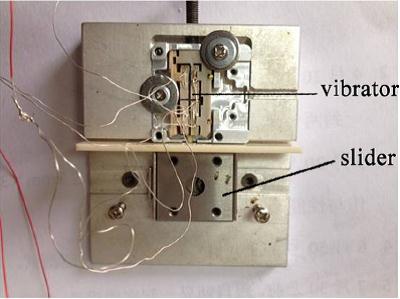
Fig. 1. A high-temperature linear piezoelectric motor.2. A High-temperature Piezoelectric Actuator
Recently, Prof. Shuxiang Dong’s group in College of Engineering, Peking University, has invented a piezoelectric actuator with nano-micrometer resolution for some special environments, which can work at a temperature up to 250?. This work was sponsored by the National Natural Science Foundation of China. This result has been published in Applied Physics Letters (101(1), 2012). Jianguo Chen, a postdoctoral fellow of the group, was the first author.
This piezoelectric actuator was a single ring-shape ceramic plate, operated in axial-symmetric shear-bending mode. The operation mechanism was also discovered by the group. The piezoelectric actuator was made of high-performance BiScO3-PbTiO3 high-temperature piezoelectric ceramic. The piezoelectrically generated displacement from a piezoelectric element is usually small. In order to produce larger displacements, piezoelectric actuators are normally designed into bimorph configuration, i.e., two piezoelectric ceramic layers are glued together by epoxy resin, or into multilayered type. However, the sliding problem between layers arises at high temperature. The invented actuator with single plate configuration without the use of epoxy resin not only works effectively at high temperature, but also generates big enough displacement for actuation applications. The measured results have shown the shear-bending displacement at the center of the actuator is 11-14 times that of a normal piezoelectric plate with identical size under an applied voltage. The actuator was able to work steadily at a temperature up to 250?. As a comparison, traditional piezoelectric actuators could work effectively at the temperature below 150?.
This high-temperature piezoelectric actuator will work as precision actuator in miniature oil valves, gas valves, and other high-temperature situations.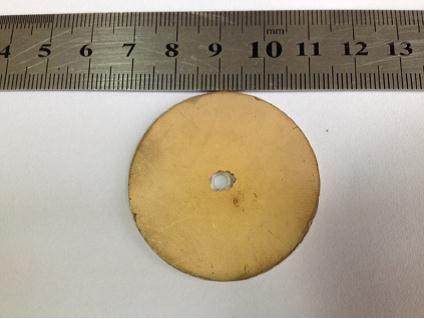
Fig. 2. A high-temperature piezoelectric actuator.3. A Piezoelectric Single-Crystal Microactuator for Driving Optics
As smart camera-phones and miniature digital cameras prevail, the need of microactuator for executing optical focusing and zoom is becoming urgent. Collaborating with Prof. Haosu Luo of Shanghai Institute of Ceramics, Chinese Academy of Sciences, Prof. Shuxiang Dong’s group in College of Engineering, Peking University, has developed a piezoelectric single-crystal ultrasonic microactuator (size: 1.5×1.5×5 mm3, weight: 0.1 g). This actuator was mainly used for precisely driving miniature optical devices for auto-focusing and auto-zooms. This work was sponsored by the National Natural Science Foundation of China. The result has been published in IEEE UFFC (58(12), 2011). Mingsen Guo, a former postdoctoral fellow of the group, was the first author. Now He is the associate professor in Nanjing University of Aeronautics and Astronautics, Nanjing, China.
Made of PIN-PMN-PT single crystal piezoelectric material, this actuator worked at the first bending actuating mode, and converted its high-frequency microscopic displacements (nanometer to micrometer scale) into a macroscopic linear displacement. The test has shown this piezoelectric single-crystal actuator can drive a slider into linear motion at a speed up to 50 mm/s. The unit volume direct driving force of the actuator is 26 mN/mm3, which is about 110 times higher than a voice coil motor and about 4 times higher than a piezoceramic ultrasonic motor.
This piezoelectric single-crystal actuator may be used in precision motion executions requiring high output force in very limited space, accuracy, fast response time, such as miniature optical and imaging devices, medical endoscopes, and next-generation optical disc drives.
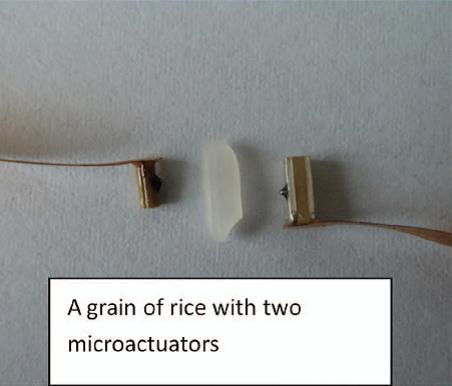
Fig. 3. A piezoelectric single-crystal microactuator.
4. A Ferromagnetic/Elastic/Piezoelectric Composite with Colossal Magnetomechanical and Magnetoelectric Coupling Effects
Multi-field couplings have been a hot area of researches in physics, materials science and electronic devices. Recently, because of the potential application of magnetoelectric effect in new function devices, Scientists all over the world have been kept searching new magnetoelectric and ferromagnetic composites to achieve stronger magnetoelectric couplings. Scientists in China are always active in the research field. Nowadays, Prof. Shuxiang Dong’s group in College of Engineering, Peking University, has developed a modified magnetoelectric composite with a cantilever beam structure, which is made of piezoelectric fibers, phosphor copper-sheet unimorph and NdFeB magnets attached at its free end. This modified structure greatly increased the magnetoelectric voltage coefficient and resulted in an enhanced bending magnetoelectric effect. The result has been published in Applied Physics Letters (101(14), 2012). Guoxi Liu, a PhD student of the group, was the first author. This work was sponsored by the National Natural Science Foundation of China and the National Basic Research Program of China.
This modified magnetoelectric composite with a cantilever beam structure was based on the magnetic force moment effect applied by a magnetic field, which causes a large bending strain of the cantilever beam, and then a colossal magnetoelectric coupling. Experiments have shown that at the first-order bending resonance frequency of about 5 Hz, the obtained magnetoelectric voltage coefficient is up to about 16 000 V/cm?Oe, which is ten times higher over that of other magnetoelectric composites reported ever. This magnetoelectric composite with a cantilever beam structure was also discovered to be able to generate large bending vibration with magnetic fields applied, which would be used in remote control through magnetic field.
Based on magnetic force moment, the bending strain of the cantilever beam and piezoelectric couplings, this composite improves the low-frequency magnetic responses of magnetoelectric composites, and may be potentially used in the next-generation high-sensitivity low-frequency magnetic sensors, magnetic remote controlling executor and new-type smart electronic devices.
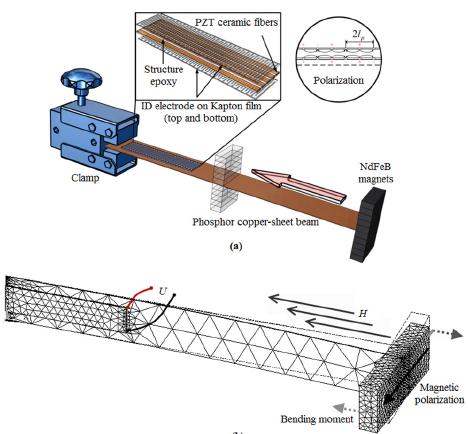
Fig. 4. A magnetoelectric composite with a cantilever beam structure.